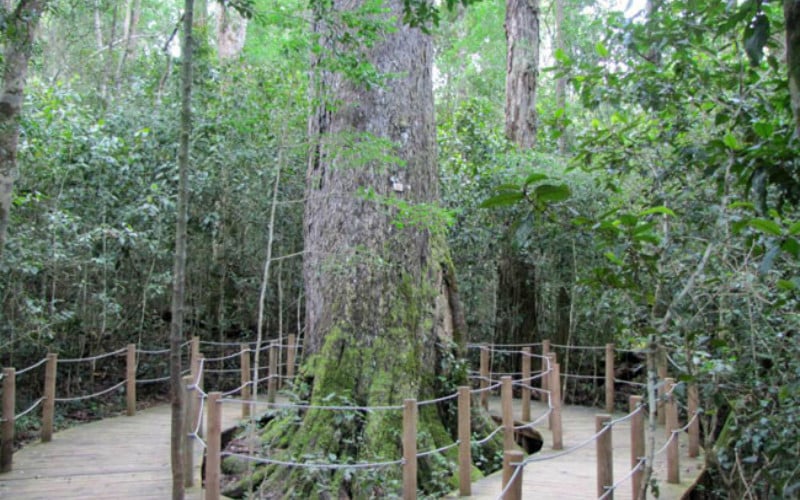
The Big Tree in Tsitsikamma is an Outeniqua yellowwood standing around 36 to 39 metres tall, with a trunk close to 9 metres around, in the indigenous forest near Storms River Village. A short boardwalk leads to it, and one SANParks permit covers the tree plus the Plaatbos and Goesa forest walks.
Most pages quote one neat height and one neat age. The real picture is a little messier, and more useful when you are planning a day out of Plettenberg Bay, so here is what we tell our own guests.
Contents Overview8 sections
The Big Tree at a glance
Picture a raised boardwalk, cool shade overhead and a trunk that looks far too wide to be one tree. These are the essentials before you go.
| Detail | What we know |
|---|---|
| Species | Outeniqua yellowwood (Podocarpus falcatus) |
| Height | About 36.6 to 39.3 m, depending on the source |
| Trunk circumference | About 9 m |
| Age | Estimates run between about 600 and 1,000 years |
| Managed by | SANParks |
| Location | Just off the N2, a short way west of the Paul Sauer Bridge, near Storms River Village |
An Outeniqua yellowwood, and how old it might be
A single, precise age makes a tidy sign, but nobody can give one with confidence. The Dendrological Society’s register lists the tree as Podocarpus falcatus, the Outeniqua yellowwood, a slow-growing forest giant once heavily felled for timber across the Garden Route. After that, the numbers loosen. SANParks itself has given estimates of 600 to 800 years and of about 1,000 years.
Visiting the Big Tree
Arrive without a bank card and you may end up admiring the parking area instead of the tree.
The SANParks permit and entrance fee
SANParks charges a daily permit to see the Big Tree, with separate rates for South Africans, SADC nationals and international visitors. Payment is by card only, with no cash accepted. The current tariff is valid until 31 October 2026 and is reviewed each year, so check the fee with SANParks in the week you travel.
Gate times
SANParks sets these entry times for the permit.
There is no entry outside these hours, so an afternoon visit in winter needs a little more planning.
The boardwalk and what to wear
The Big Tree is a short, easy stroll along a boardwalk from the parking area, about 10 minutes according to SANParks, and everyday walking shoes are fine for it. For the longer walks nearby, closed shoes with some grip and a light layer for the shade make more sense. Our travel information for visitors covers what else to pack for a Garden Route day.
Plaatbos and Goesa walks in the Tsitsikamma forest
Walking only the boardwalk is perfectly fine. If your day allows, though, the same permit keeps you in the Tsitsikamma forest for longer, on two more walks through tall indigenous forest. For a longer outing, the Ratel Trail starts from the same area.
The Tsitsikamma forest beyond the Big Tree
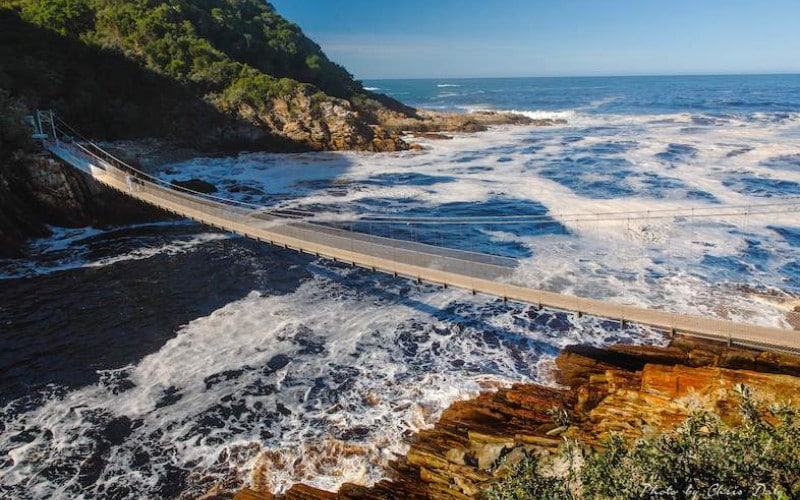
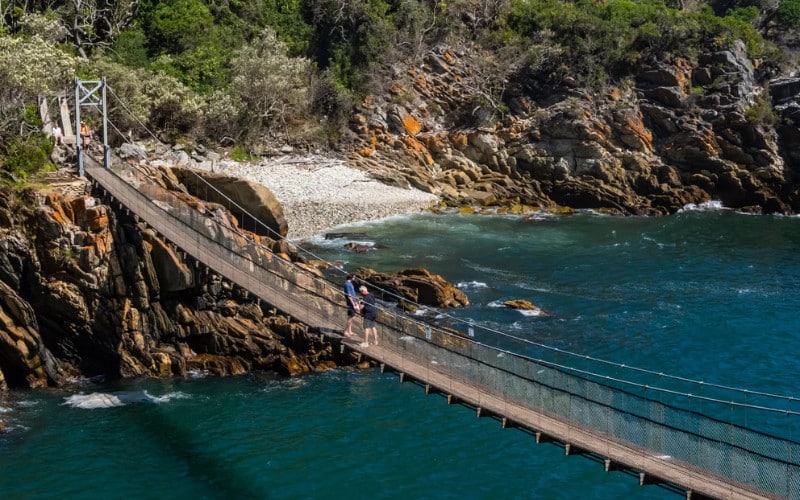
That works in your favour: two different moods in one day, the hush of the forest and then the sound of the sea. Our guide to Storms River Mouth and the suspension bridge covers the second half of that day, and our Garden Route area guide shows how Tsitsikamma sits alongside the region’s towns and highlights.
Adding the Big Tree to a Tsitsikamma day
The Big Tree is a quiet chapter of the day rather than the whole story. It is one of the highlights on our private Tsitsikamma day tour, with just your group, your guide and your pace; ask when you enquire how the day is arranged. An early start leaves time to linger under the trees and still reach the coast.
Gate times shift with the seasons, so our guide to the best time to visit the Garden Route is worth a look before you pick dates. For a different mix of stops, our custom Garden Route day tours can be built around you, and our guide to things to do in Plettenberg Bay covers the rest of your stay.
A visit to the Big Tree in Tsitsikamma asks little of you and rewards a slow pace. If you would like a local to take the wheel and handle the permit and the timing, see the Big Tree on a private Tsitsikamma tour.
Frequently asked questions
Question: What type of tree is the Big Tree in Tsitsikamma?
Answer:
It is an Outeniqua yellowwood, listed on the Dendrological Society’s National Register of Big Trees. It stands about 36.6 to 39.3 metres tall, depending on the source, with a trunk circumference of about 9 metres. Estimates of its age vary widely, between about 600 and 1,000 years.
Question: How long is the Big Tree walk?
Answer:
The Big Tree itself is a short, easy walk along a boardwalk from the parking area and suits most visitors. The Plaatbos and Goesa walks, covered by the same SANParks permit, and the longer Ratel Trail start from the same area for anyone who wants more time in the forest.
Question: Do you pay to see the Big Tree?
Answer:
Yes. SANParks charges a daily permit fee that covers the Big Tree, Plaatbos and Goesa walks. Rates differ for South Africans, SADC nationals and international visitors, payment is by card only, and the tariff is reviewed each year, so check the current fee with SANParks before you visit.
Question: Is the Big Tree inside Tsitsikamma National Park?
Answer:
Yes. SANParks lists the Big Tree under the Tsitsikamma section of the Garden Route National Park. It has its own entrance near Storms River Village, separate from Storms River Mouth where the suspension bridge is, so most visitors plan them as two stops on the same day.
Resources
- SANParks: Garden Route National Park notice on the Plaatbos, Goesa and Big Tree daily permit, fees, gate times and card payment
- SANParks: Garden Route National Park forest excursions, Tsitsikamma Big Tree
- George Herald: entry fees for the Plaatbos and Goesa forest trails in Tsitsikamma
- Dendrological Society of South Africa: the top thirty trees of the National Register of Big Trees
- South African Government: Champion Trees declared protected under the National Forests Act